🔥 MIỄN PHÍ VẬN CHUYỂN cho đơn hàng trên 500K - Hotline: 0982800084
🔥 MIỄN PHÍ VẬN CHUYỂN cho đơn hàng trên 500K - Hotline: 0982800084
Automation should improve productivity, consistency and control. But purchasing equipment is only one part of achieving those results. A factory also needs the knowledge to specify what it requires, evaluate what suppliers propose, monitor implementation and verify that the completed system performs under real operating conditions.
Without that oversight, an attractive quotation can become an expensive problem: delayed commissioning, unstable operation, repeated modifications, production interruptions and a system that operators struggle to maintain.
The cheapest quotation is not necessarily the lowest-cost solution. The real cost becomes clear over the life of the system.
The savings that disappear after installation
Consider an illustrative scenario. A factory selects a low-priced automation package from an overseas supplier. The demonstration looks convincing, and the proposed delivery date meets the production plan. To reduce the initial investment, the factory accepts limited documentation, remote-only assistance and no clearly defined warranty or local after-sales service.
After installation, the system works under ideal conditions but struggles when product characteristics change or production reaches its required rate. Operators begin making manual adjustments. A sensor fails, but a replacement is not stocked locally. The supplier needs additional payment for a site visit. The factory then discovers that it does not have the current PLC program backup or the access needed for another specialist to diagnose the problem.
The purchase-price saving is now being consumed by troubleshooting, spare parts, travel, lost output and rework. Management may eventually pay another contractor to modify or rebuild parts of a system it has already purchased.
This example is hypothetical, but it illustrates a practical purchasing risk: a low equipment price can transfer substantial implementation and support costs to the buyer.

Overseas sourcing requires a support plan
Foreign suppliers can offer valuable technology and competitive pricing. The issue is not where a supplier is located; it is whether the supplier’s technical capability, responsibilities and support arrangements match the factory’s needs.
Some factories, under pressure to save money, engage overseas suppliers without a meaningful warranty or dependable after-sales service. Others assume support is included without checking who will provide it, how quickly help will arrive or which expenses remain the customer’s responsibility.
Before placing an order, the factory should establish:
A warranty statement alone cannot keep production running. The support arrangements must be practical for the factory’s location and operating schedule.
Why capable suppliers still need capable supervision
Even a competent supplier cannot reliably deliver an outcome that the customer has not clearly defined. Factories understand their products and production priorities, but may not have in-house expertise across process engineering, instrumentation, control systems and project commissioning.
That gap can leave important questions unanswered. Does the design account for actual raw-material variation? Are instruments suitable for the process environment? How will new controls communicate with existing equipment? What happens when a sensor fails, power is interrupted or the process moves outside its normal range?
When several contractors are involved, responsibility can also become fragmented. The equipment supplier may exclude controls integration. The controls contractor may assume that field instrumentation has already been selected and installed correctly. The factory is then left managing the gaps between their scopes.
Technical oversight brings these issues into the open before they become expensive site modifications. It connects the factory’s operational requirements with supplier deliverables and gives management a sound basis for decisions.
Verify performance before accepting the system
A system should not be accepted simply because it powers up, displays readings or completes a short demonstration.
Acceptance criteria should be agreed early and linked to the intended process: throughput, consistency, operating range, alarm behavior, recovery from interruptions and any other relevant performance requirements. Where appropriate, factory acceptance testing should verify agreed functions before shipment. Site acceptance testing should then confirm installation, integration and operation under representative site conditions.
Open issues should be documented, assigned and tracked to closure. Training, drawings, manuals and agreed software deliverables belong in the handover process, alongside the equipment itself.
The objective is straightforward: establish evidence that the factory has received a usable, maintainable system that meets the agreed requirements.
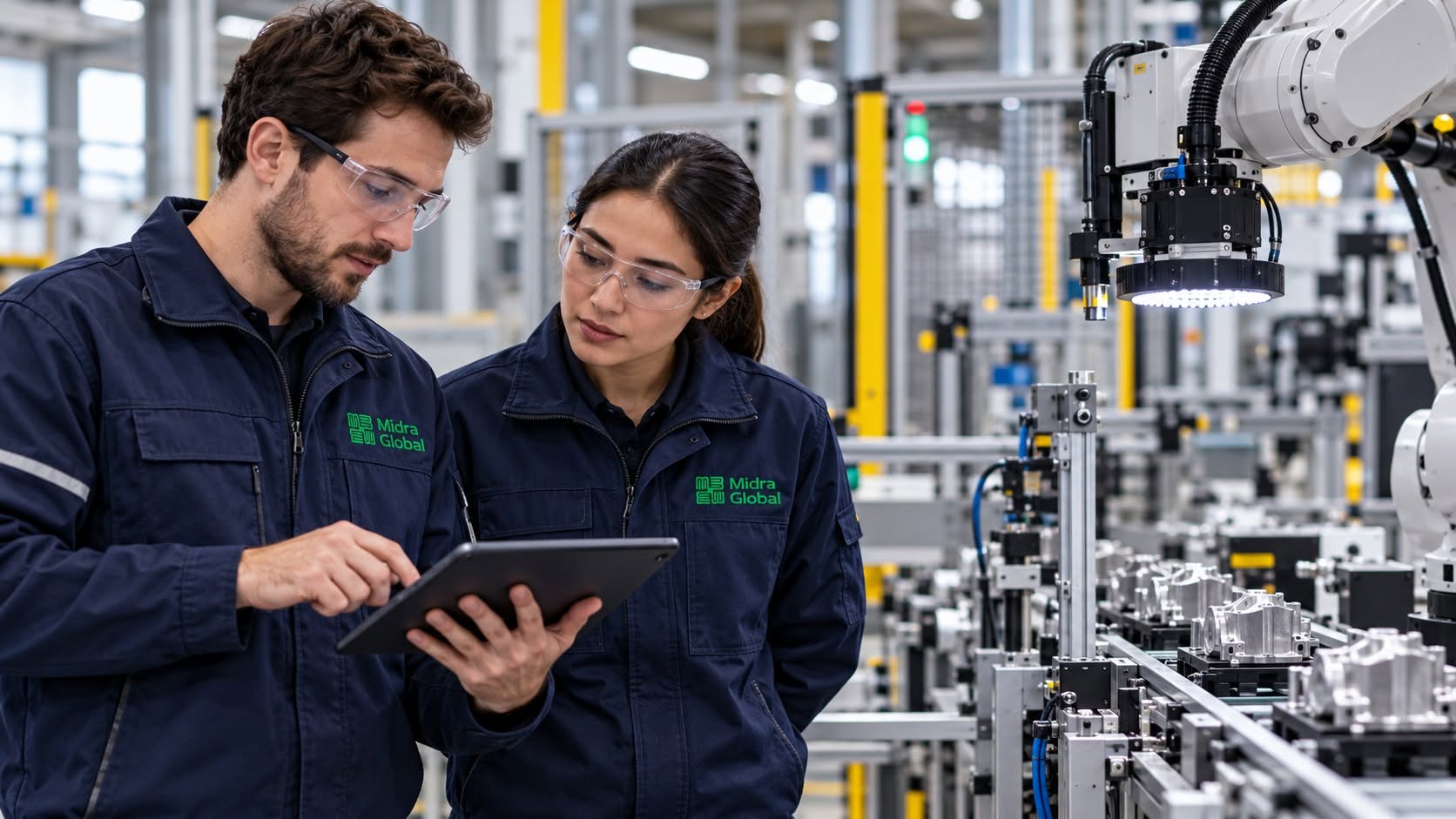
How Midra Global can assist?
Midra Global can help FDI factories strengthen the technical oversight between their operations team and their automation suppliers or contractors. Depending on the agreed scope, this support can include:
This support gives factory management a clearer view of what is being purchased, what remains unresolved and what must be demonstrated before acceptance.

Buy for the production years ahead
Good cost control means understanding the complete investment: equipment, engineering, integration, commissioning, maintenance, support and the consequences of downtime.
A lower-priced proposal may still be the right choice when its scope is complete, its performance is verified and its support is adequate. But a proposal that achieves its low price by omitting essential work can become the most expensive option.
Before committing to your next automation project, ask: who will protect our technical interests from specification through handover?
Contact Midra Global to discuss technical review, supplier coordination and project supervision for your process automation requirements.
Midra Global — Trustable always