🔥 MIỄN PHÍ VẬN CHUYỂN cho đơn hàng trên 500K - Hotline: 0982800084
🔥 MIỄN PHÍ VẬN CHUYỂN cho đơn hàng trên 500K - Hotline: 0982800084
Selecting the Right AGV: Why Successful Automation Requires More Than Choosing a Vehicle
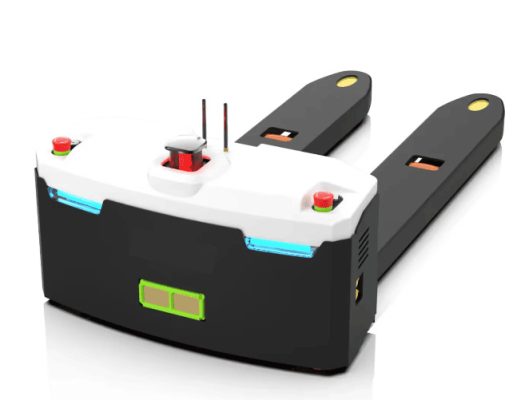
Automated Guided Vehicles (AGVs), Autonomous Mobile Robots (AMRs) and autonomous forklifts are transforming material handling in factories and warehouses. They can automate repetitive pallet movements, improve material-flow consistency, reduce unnecessary manual travel and support safer operations.
However, selecting the correct vehicle is only the beginning.
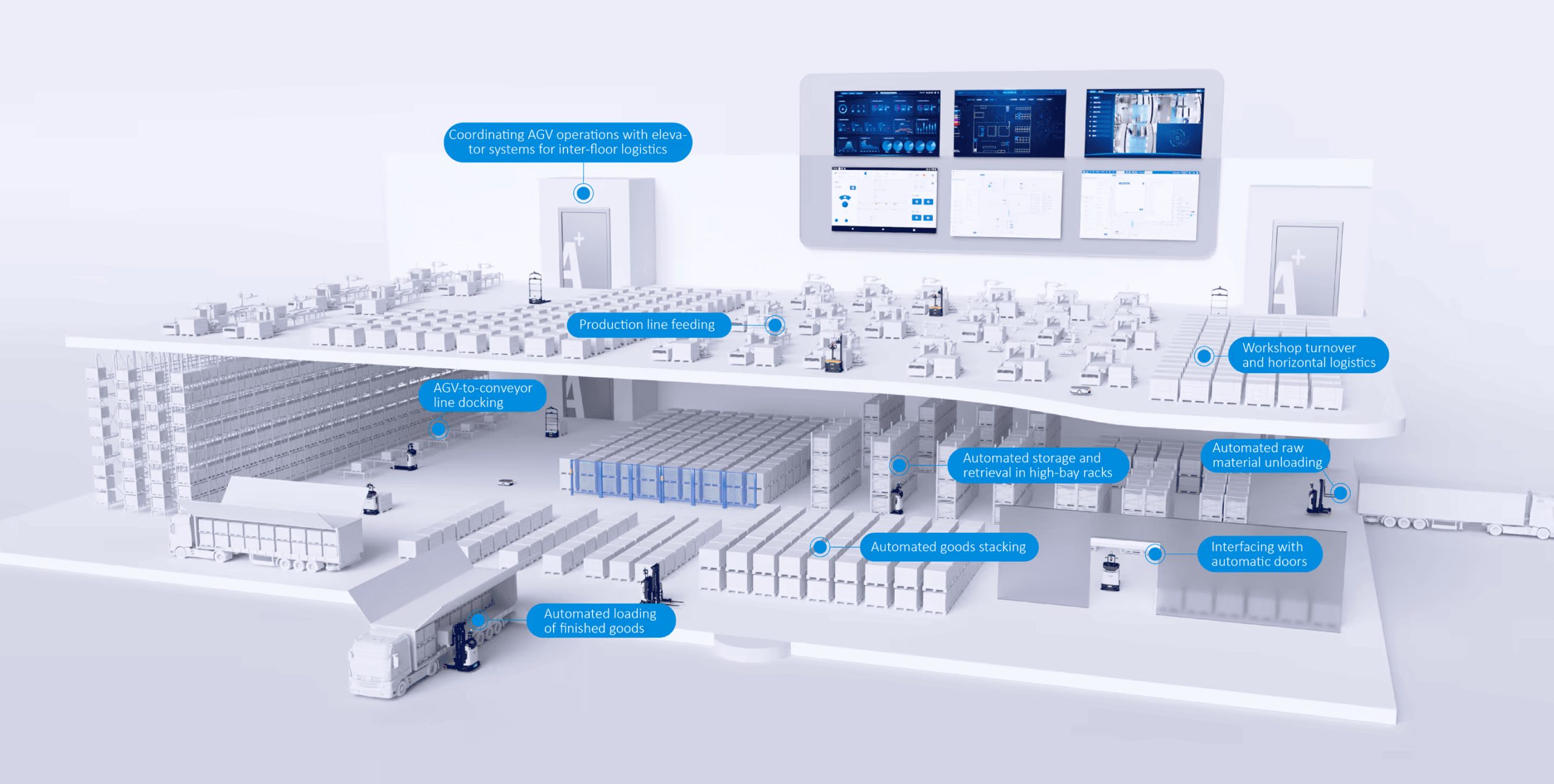
The real challenge is integrating the equipment into the customer’s existing operation.An AGV must work reliably with pallets, people, production schedules, warehouse systems, traffic routes, charging facilities and other factory equipment.
Midra Global assists customers in Vietnam with the complete process—from understanding the application and selecting the most appropriate AGV to system integration, commissioning and operational acceptance.
AGV selection must begin with the material-flow requirement
A common mistake is to select an AGV based only on its rated load or published specifications. Although payload, speed, lifting height, battery capacity and navigation technology are important, the final selection must be based on the customer’s complete operating process.
Before recommending an AGV, Midra Global evaluates questions such as:
These details determine not only the type of AGV required but also the number of vehicles, charging strategy, route configuration and system-control architecture.
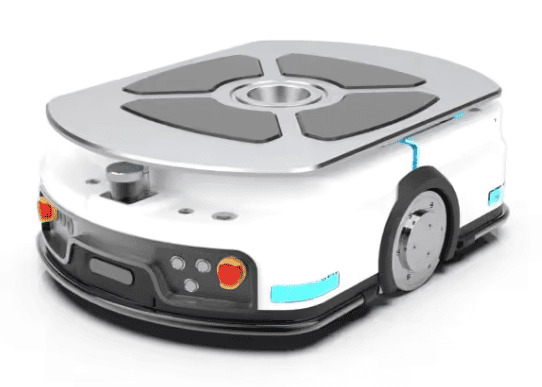
Pallet compatibility is critical
Even an advanced autonomous forklift cannot operate reliably if the pallet is unsuitable.
Midra Global checks pallet length, width, height, fork-entry dimensions, underside structure, load distribution and physical condition. Pallets must be sufficiently standardised so that the vehicle can detect, enter and lift them consistently.
Open-bottom, heavily damaged, deformed, reflective, transparent or very dark pallets can create detection challenges, depending on the sensor arrangement. Stretch film, straps or goods extending beyond the pallet can also interfere with automatic pickup.
For this reason, pallet verification and testing should be completed before the final AGV configuration is approved. In some projects, modifying or replacing the existing pallets may be necessary to achieve reliable operation.
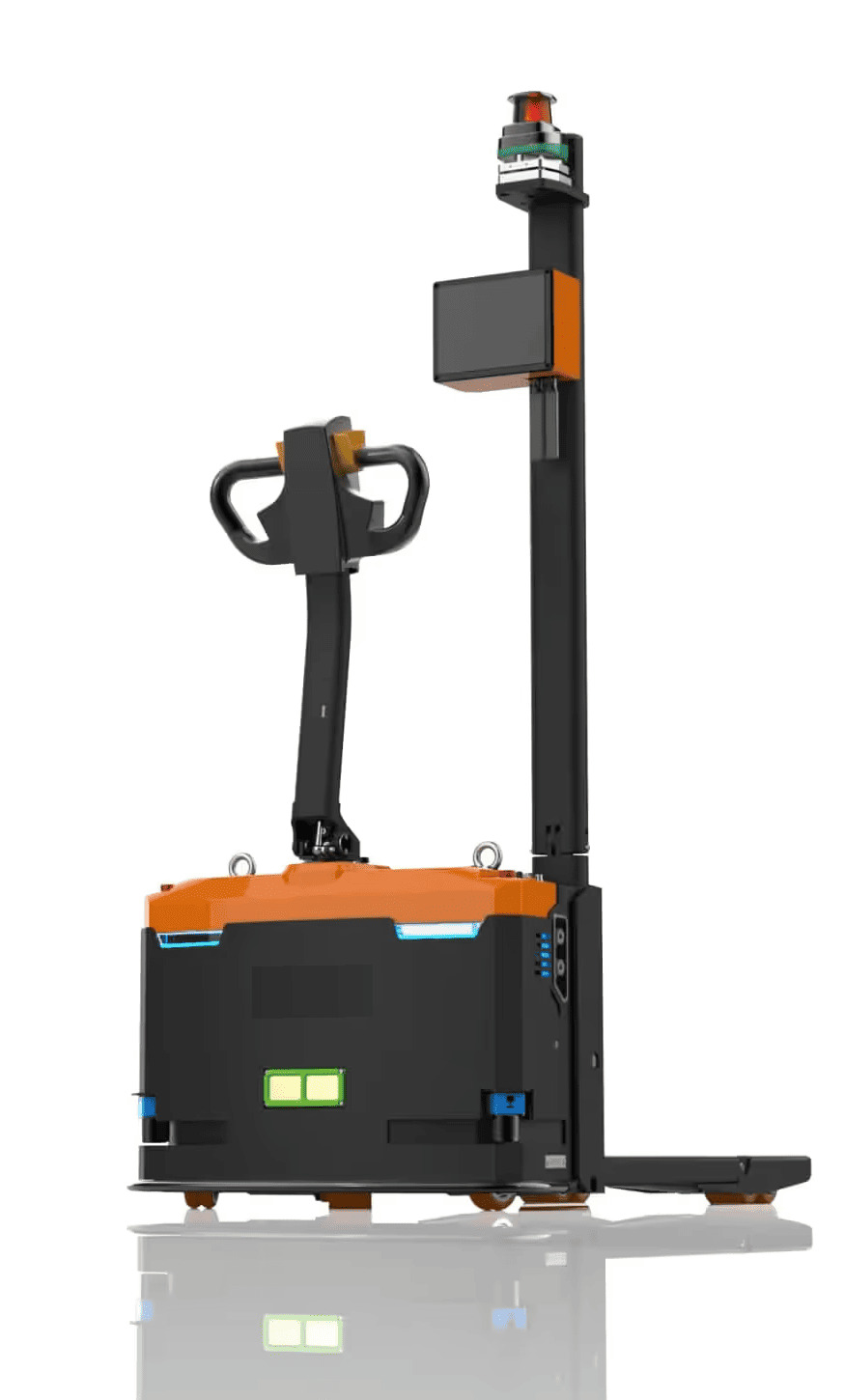
Calculating throughput and fleet size
The number of AGVs required cannot be determined from the number of pallets alone.
Midra Global analyses the complete transportation cycle:
This information is compared with the required pallet movements per hour. The resulting calculation helps determine whether one AGV is sufficient or whether multiple vehicles and a fleet-management system are necessary.
This engineering step prevents both under-sizing—which can create production bottlenecks—and over-sizing, which increases investment without delivering proportional benefits.

Pickup, drop-off and standby-point design
Every transfer point must be accurately defined.
In one recent project evaluation, the system concept included six pickup points, three drop-off points and two stand-by, charging or traffic-avoidance areas. Each location required confirmation of pallet orientation, approach direction, available clearance, detection method and communication with the operational system.
Transfer points must also remain controlled and repeatable. If operators place pallets inconsistently, the AGV may not be able to engage them correctly. Positioning guides, floor markings, sensors or pallet-detection devices may therefore be required.
Route planning and intelligent traffic control
The shortest route is not always the best route.
Midra Global evaluates aisle width, turning radius, right-angle stacking clearance, pedestrian crossings, blind corners, emergency exits, forklift traffic and production areas where temporary obstructions may occur.
When several AGVs operate together, traffic management becomes even more important. The scheduling system must prevent congestion, coordinate access to intersections and avoid deadlocks.
Midra Global selected AGVs with Robot Dispatch System can support task allocation, real-time route planning, traffic control, robot-status monitoring, intelligent charging and multi-vehicle coordination. It can also display vehicle position, battery level, current task and fault information.
The objective is to create a controlled logistics system—not simply allow individual vehicles to travel independently.
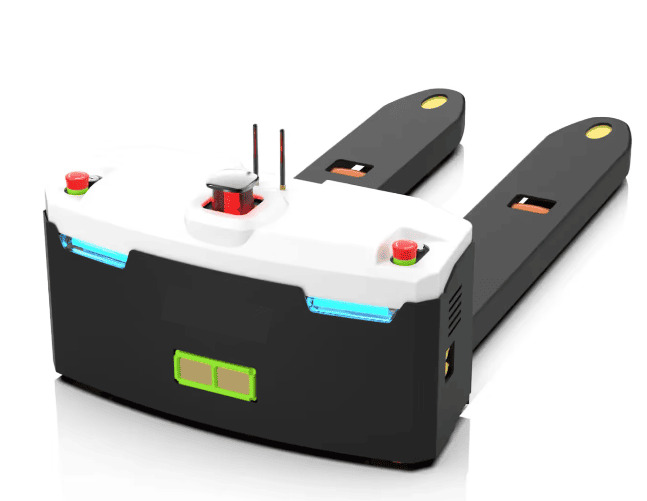
Navigation, safety and site conditions
Midra Global selected AGVs provides autonomous pallet-handling solutions using technologies such as laser SLAM navigation, intelligent pallet perception and multi-sensor obstacle detection.
Laser SLAM allows the vehicle to map and navigate within an industrial environment without relying solely on fixed magnetic tape. Safety functions can include LiDAR-based detection, configurable warning and stopping zones, fork-tip sensors, mechanical anti-collision protection, audible and visual warnings, and emergency-stop buttons.
Nevertheless, the factory environment must be suitable for autonomous operation. Midra Global therefore reviews:
Safety is developed through a combination of vehicle technology, route design, operating procedures, signage, training and site controls.
Integration with the customer’s systems
A fully integrated AGV should receive transport requests automatically and report task status back to the customer’s system.
Depending on the application, integration may include:
For WMS-controlled operations, the customer’s system can issue a point-to-point transfer request through an agreed API. The dispatch software then assigns an available vehicle, plans the route, controls traffic and reports task completion.
Successful integration requires clear responsibility for software development, network preparation, signal definitions, interface testing and exception handling.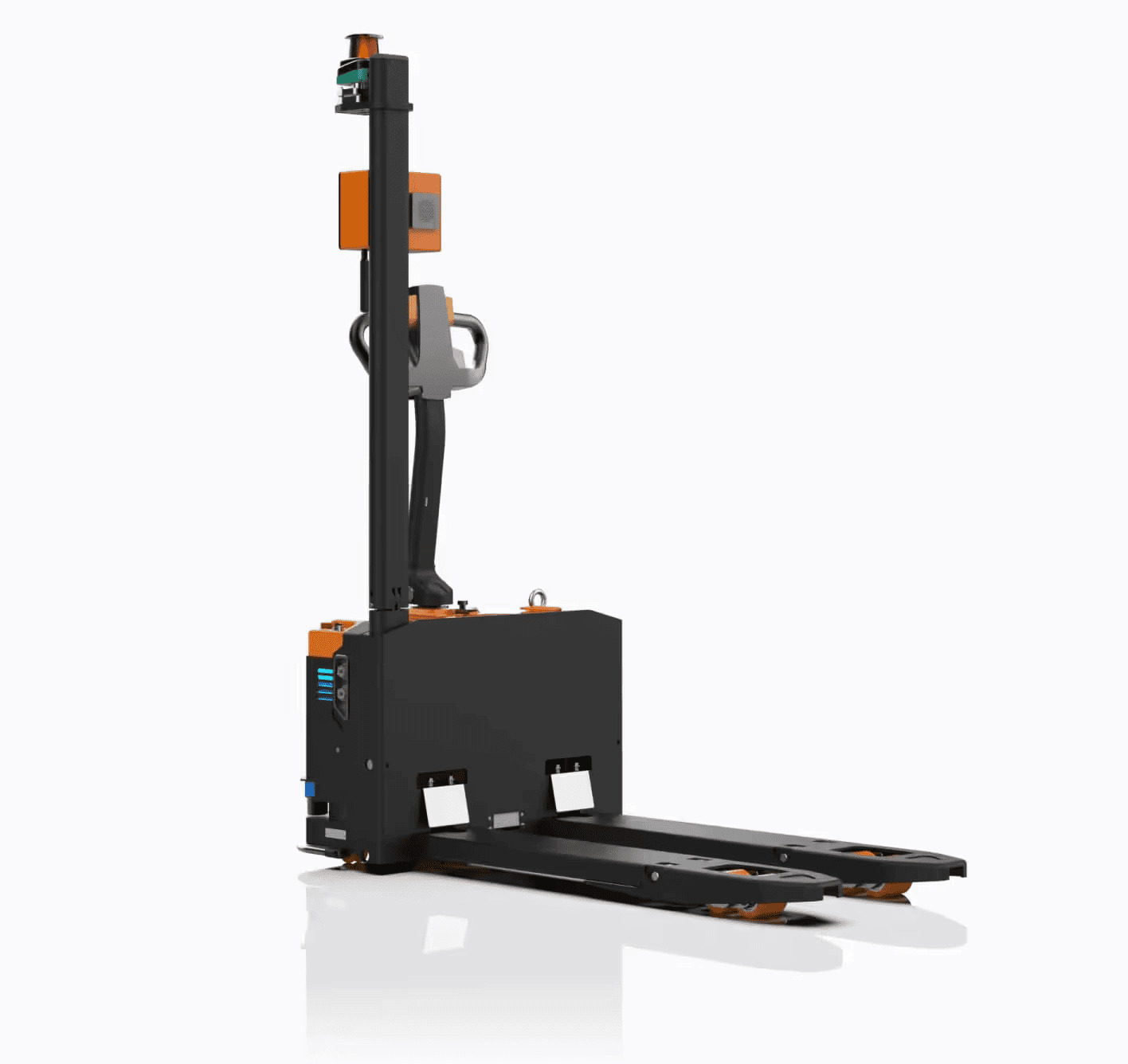
A structured implementation process
Based on Midra Global’s project experience, a professional AGV implementation should include:
During commissioning, vehicle speed, routes, stopping zones, obstacle-avoidance parameters and charging logic must be optimised under actual operating conditions.
How Midra Global adds value
Midra Global does more than source an AGV.
Our engineering team works between the customer and equipment manufacturer to translate production requirements into a practical automation solution. We help confirm the application, compare suitable models, identify site modifications, coordinate technical communication, support integration and verify that the final system meets the agreed operational objectives.
This local engineering support helps customers:
With access to a portfolio of automated pallet trucks, stackers, forklifts and intelligent software platforms, Midra Global can recommend a solution matched to the customer’s load, throughput, layout and budget.
Make AGV automation easier with Midra Global
A successful AGV project begins with understanding the operation—not simply purchasing a vehicle.
Whether the requirement involves moving pallets between production lines, supplying materials to workstations, transferring finished goods or automating warehouse logistics, Midra Global can assist with equipment selection, system design, integration and implementation.
Contact Midra Global to arrange an initial AGV application assessment.
Website: www.midra.vn